Connecting Tradition and the Future in Hungary

In a fascinating presentation at the Coin Conference in Amsterdam last October, Anikó Bódi-Schubert of Magyar Nemzeti Bank (MNB, the Hungarian central bank) told delegates about an ambitious programme that has brought coin collecting into the digital age.
In 2021, Hungary celebrated the 75th anniversary of the introduction its currency, the forint. The MNB wanted to commemorate the occasion not just in a traditional way, but also in an innovative way. To do this, it issued commemorative circulation coins in both physical and digital forms.
The project started with a design competition, involving 20 artists who submitted 47 different designs. The MNB held a public online vote on five selected designs, attracting considerable interest. More than 77,000 votes were cast, with the winning design, by Mónika Gyuró, receiving over 21,000 votes.
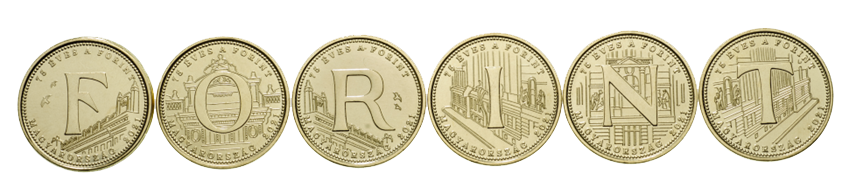
The MNB issued six commemorative versions of the 5 forint circulation coin. Placing the coins in the correct order, they form the word FORINT and display the Magyar Nemzeti Bank head office at Szabadság square in Budapest. The face value sides of the collector versions are identical with that of the 5 forint circulation coin.
The bank chose the 5 forint as it is the most circulated coin, making up 33% (or 774 million pieces) of all coins in circulation.
To ensure these collector coins reached as many citizens as possible, the MNB issued 2 million pieces of each lettered version, totalling 12 million pieces. This is the largest quantity of commemorative versions of circulation coins produced and issued in the history of the forint. Members of the public were able to collect each of the six different versions of the coin during everyday purchases, from general cash in circulation.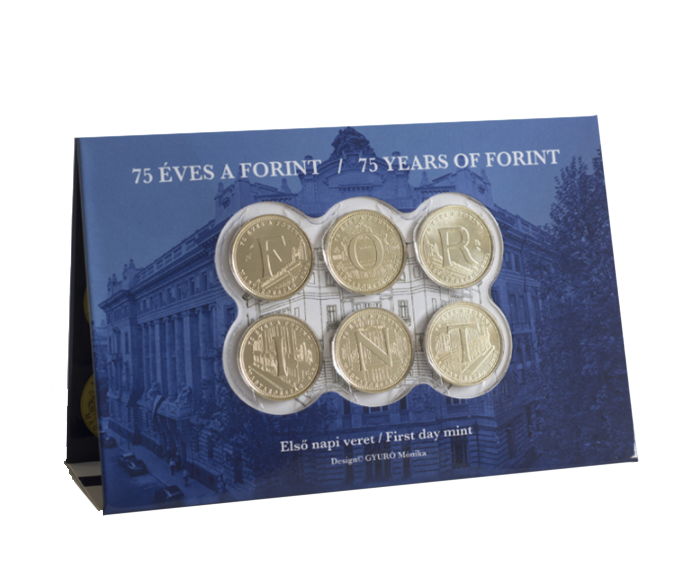
The Hungarian Mint provided consumers with the option to purchase empty collection cases, so that people could place the coins collected from the cash circulation in them. The Mint also put together an exclusive set containing commemorative versions of the coins.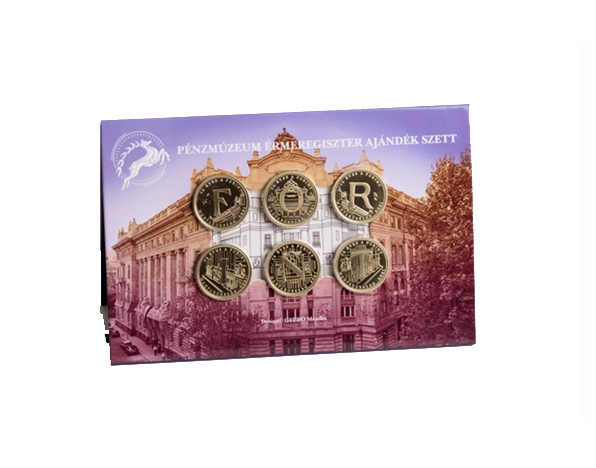
Money Museum app
On International Museum Day, 18 May 2022, the MNB launched a new mobile application, which has two main functionalities. Firstly, it provided a new channel for displaying useful content related to the Money Museum and finances in general to enhance the interactive museum experience.
Secondly, the app offers an innovative opportunity to test blockchain-based technology. Utilising this, the MNB has created a dedicated platform for NFT (Non-Fungible Token) issuance and coin registration, something of a novelty among central banks.
The first series of NFTs available in the mobile application were issued in May, with a second series issued in July and a third in August. More than 200,000 NFTs had been issued, with the Bank expecting this figure to rise with the launch of the fourth series.
The NFT versions are based on the six collector versions of the 5 forint circulation coin. Users can obtain these NFTs by solving quizzes related to finance, money and coin collecting. By collecting NFTs containing all six letters of the word ‘FORINT’, users can participate in a prize game in which they can win special physical coin sets.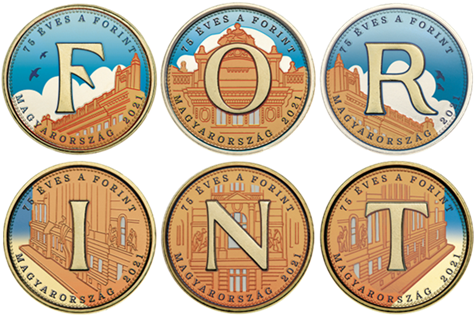
The new mobile application also provides its users with an opportunity to register some of their newly issued special, actual collector coins in the future on the MNB’s private blockchain after purchase, using the unique QR codes on the packaging. The first product with a unique QR code can be won in the prize game of the Money Museum’s mobile application by collecting all the pieces in the ‘75th birthday of the forint’ NFT series.
According to MNB, the combination of traditional and modern technology offers a method to communicate with groups that are typically more difficult to reach conventionally, such as younger people, popularising coin collecting and providing a platform for spreading financial knowledge.
The Bank noted that the project created an exceptional opportunity for it to test innovative, digital developments with active participation of the public, which can lay the foundation for future plans for the implementation of central bank digital currency (CBDC) in Hungary.
Subscriber content
Read the full article
Full access to Coin & Mint News articles, newsletters and archives.