Celebrating Sustainability at the MDC Awards


Held during the Gala Dinner at the recent MDC 2023 in Ottawa, Canada, the MDC Awards included an additional category for the first time, namely the ‘Best Sustainability Initiative’.
Last month’s issue of Coin & Mint News covered the category winner, the Royal Dutch Mint’s ‘The Dutch Vault’, and this month we cover the other two finalists – the US Mint’s ‘Circulating Blank Annealing Furnace Retrofit’, and The Royal Mint’s ‘Local Energy Centre (LEC)’.
Circulating Blank Annealing Furnace Retrofit
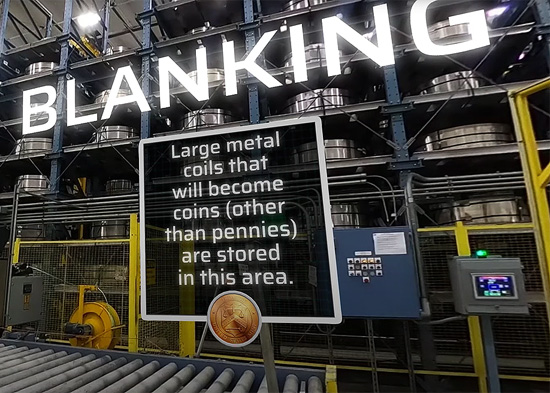
The United States Mint was one of three finalists in the category, for its programme to reduce natural gas usage and pollutant output while maintaining thermal and operational characteristics of the furnaces used at its plants in Philadelphia and Denver.
To achieve this goal, the protective atmosphere used in the annealing process was switched from the traditional exogas generated by natural gas combustion to a mixture of high purity gas at a ratio of 97% nitrogen to 3% hydrogen. Both are created in cabinet generators near the furnaces, utilising electricity and water provided by the local utility company.
The result has been an overall reduction of the output of carbon dioxide and other greenhouse gas emissions by 2,000 metric tonnes per year. As the Mint’s power providers continue to transition to renewable sources, the reduction of greenhouse gases is set to increase by as much as a further 900 metric tonnes per year.
It has also resulted in a reduction of energy required to ventilate the production area by eliminating the production of carbon monoxide (which is a byproduct of natural gas combustion to generate the exogas atmosphere).
In addition, the furnaces were retrofitted with higher efficiency recuperative burners to further reduce natural gas consumption, down by 50% from 1.415 million cubic meters to 708,000 cubic meters.
A further benefit has been an increase in blank quality, since the nitrogen/hydrogen atmosphere reduces the amount of oxides forming on the blanks during the annealing process. This in turn has reduced the use of chemicals during the post -processing and cleaning of the coin blanks and hence less wastewater output.
Safety at the facilities has also improved due to the elimination of flammable environment and the reduction of carbon monoxide generated.
According to the US Mint, it has in alignment with the United States Department of Treasury, established in its strategic plan a goal of advancing its circulating coin mission through innovation and technology, with the objective of combatting climate change. Further, the Mint strives to be a world class manufacturing operation.
‘As such, we must be leaders in environmental stewardship and sustainability. We hope that these documented achievements will become industry standard and/or adopted by other industries with similar heat-treating needs.’
Local Energy Centre (LEC) – the GSCS (Generation Storage Consumption Supply) Project
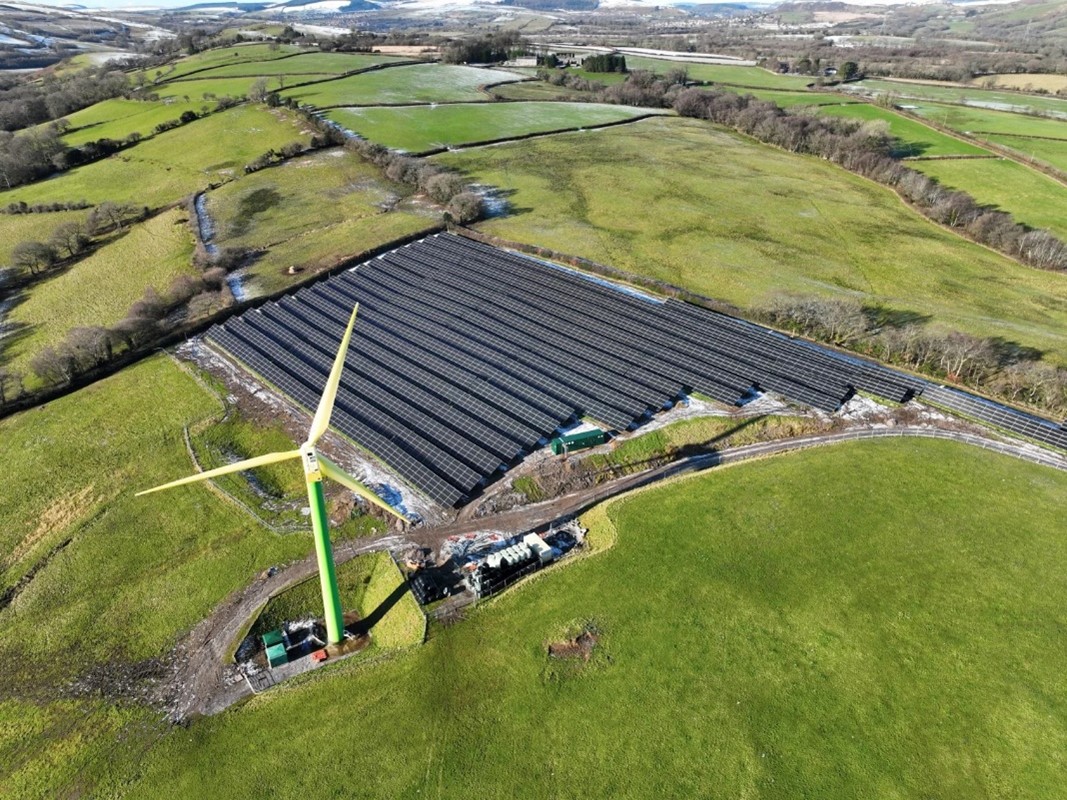
The other finalist in this category was The Royal Mint (TRM) for its Local Energy Centre (LEC), which has been developed in collaboration with Infinite Renewables Group Ltd as part of the Generation Storage Consumption Supply (GSCS) project. The initiative was funded by the European Regional Development Fund, through the Welsh Government and Albion Community Power.
The project integrates renewable and low carbon generation technologies with battery storage, creating a local micro grid network that is intended to generate up to 70% of the electricity needed to power the Mint’s 38-acre manufacturing site.
Following the unveiling of its first daffodil-themed wind- turbine in 2018 (‘Delilah’), the new LEC compromises an additional turbine, a 2MW 4,000+ panel solar farm, a hydrogen-ready combined heat and power unit (CHP) and a dual chemistry battery energy storage system (BESS).
The CHP used for the brass plating line is expected to provide around 70% of the electricity needed to power this particular process and equipment. The solar farm and wind turbines are providing around 50% of the power consumption needs of TRM’s Armour 2 nickel plating line.
According to TRM, the LEC has helped contribute to a decrease of approximately 40% in CO2 emissions from energy (electricity and gas), in comparison with Q1 of FY21/22 data. TRM uses 2021/22 as its baseline year for measuring its decarbonisation performance. The solar farm alone generated 244,245kWh in the first three full months of operations, January to March 2023, which is enough energy to power 84 UK households for a year.
The project aims to reduce reliance on grid electricity from approximately 97% to around 30%. The Mint says that this forms a key part of its commitment to decarbonise its operations by transitioning away from fossil fuels to renewable energy and reducing energy consumption.
 Source: The Royal Mint.
Subscriber content
Read the full article
Full access to Coin & Mint News articles, newsletters and archives.