Mexico to Optimise its Coin Range

At the Coin Conference last October in Amsterdam, Alejandro Alegre Rabiela, General Director of Currency Issuance and Chief Cashier of Banco de México (BdM), described the proposals being made to improve Mexico’s coin circulation, the objectives being to provide all users with increasingly useful and higher quality coins and to satisfy the demand for coins by efficiently using public resources in their production and distribution.
A comprehensive review involving the public, international benchmarking against 43 countries and the European Union, and research into coin production technologies and materials has led to recommendations for a series of changes. Some of these have already been decided, others await the decision by the BdM’s Governing Board, expected some time this year.
BdM is responsible for providing domestic currency to the public. It places orders on the Mexican Mint and issues and distributes coins through the six cashier branches and a network of correspondents. While the Congress decides the design of coins, the Mint is subordinated to the Ministry of Finance and Public Credit.
As of last October, there were about 336 coins in circulation per person, 43.7 billion in total, for use by Mexico’s 130 million people. The Mexican Mint has a production capability of 2.5 billion coins a year, which it is estimated will be fully used in 2023.
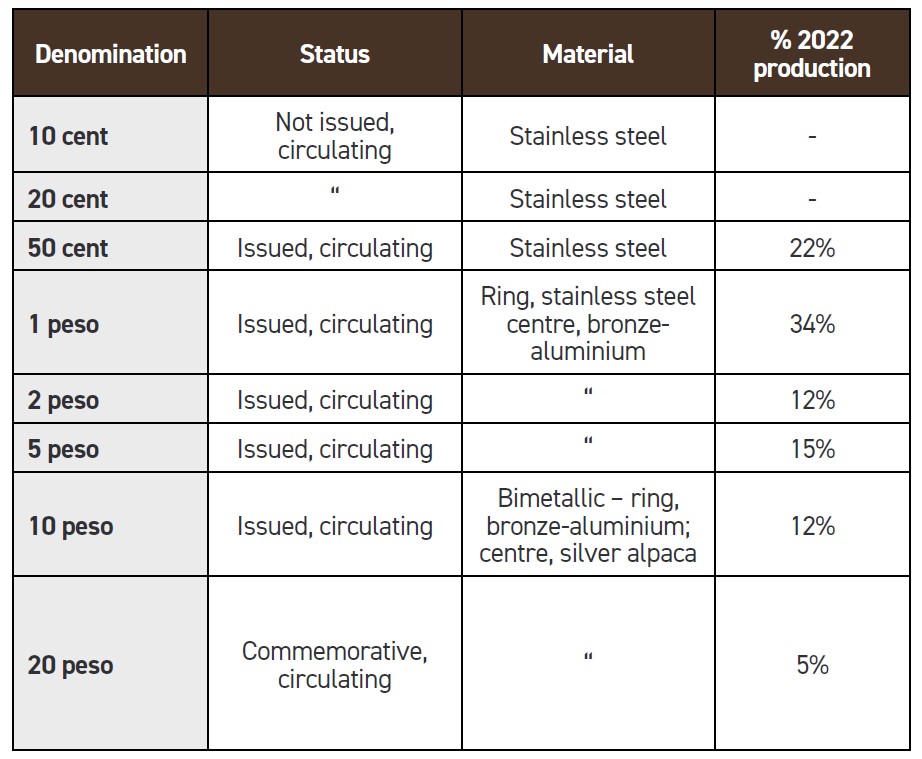
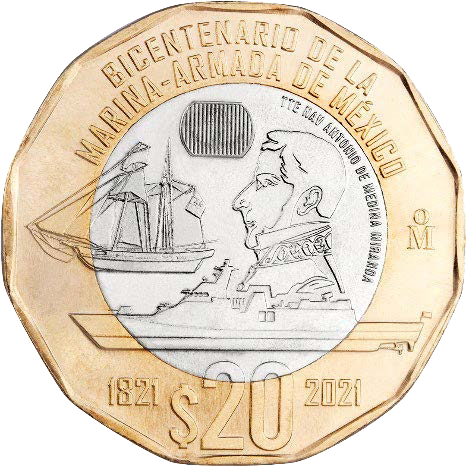
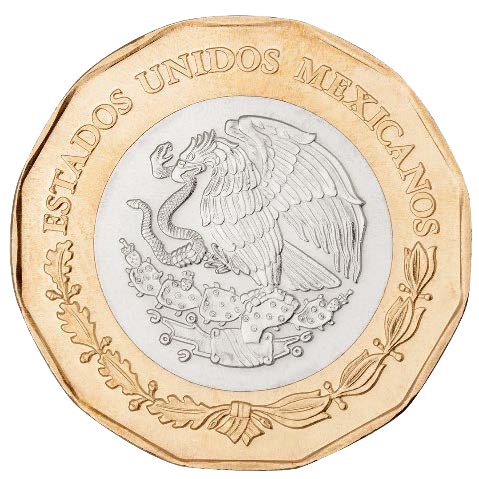
There are eight coin denominations in circulation, but the 10 and 20 cent coins are no longer issued. The 20 peso coin has been in circulation for many years but as a circulating commemorative coin. It was redesigned in 2020, with seven versions issued since then. All versions have a common face but different themes on the reverse, commemorating events ranging from 500 years of the founding of the city and port of Veracruz – the first in the new design issued in April 2020 – to the bicentennial of the Mexican Navy, issued last October.
The new G series of banknotes, introduced from 2018 onwards includes a 20 peso commemorative note, which was issued in 2021 to mark the bicentennial of Mexico’s Independence.
Public opinion of the coins
Surveys carried out by 2019 among the public on the various coins denominations produced the following results:
10, 20, 50 cents
Easy to confuse with each other.
Difficult to handle.
Not accepted in vending machines.
Not processed in sorters.
20 pesos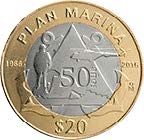
Large and heavy.
Easy to confuse with the 10 pesos (both bimetallic and of a similar size).
Not accepted in vending machines.
Not processed in sorters.
Lack of security features.
 Optimisation proposals
50 cent
50% of the public don’t like the coin and, although it accounts for 22% of minted coins, it is hardly used and suffers a high loss rate.
There was a proposal to increase the coin’s size from 17mm to 22mm so the coin is easier to distinguish, which would also make it possible for the coin to be used in vending and sorting machines.
However, the production costs of a 22mm diameter coin were updated, finding that its unit cost would be almost two times its face value due to the increase in the price of steel and energy. This is not consistent with the originally estimated benefit and it is expected not to be convenient as the real value of the denomination decreases over the next few years.
Thus it has been decided that the best option is to keep the coin’s current diameter.
1, 2, 5 and 10 pesos
The price of copper has increased by 50% in the last two years. The 1, 2 and 5 peso coins currently have a 9% copper content while the 10 pesos has 65%. These coins can be produced with plated components instead of copper-based alloys without changing their design and appearance.
This change will reduce the overall copper content to 5%, saving about $12 million per year.
20 pesos
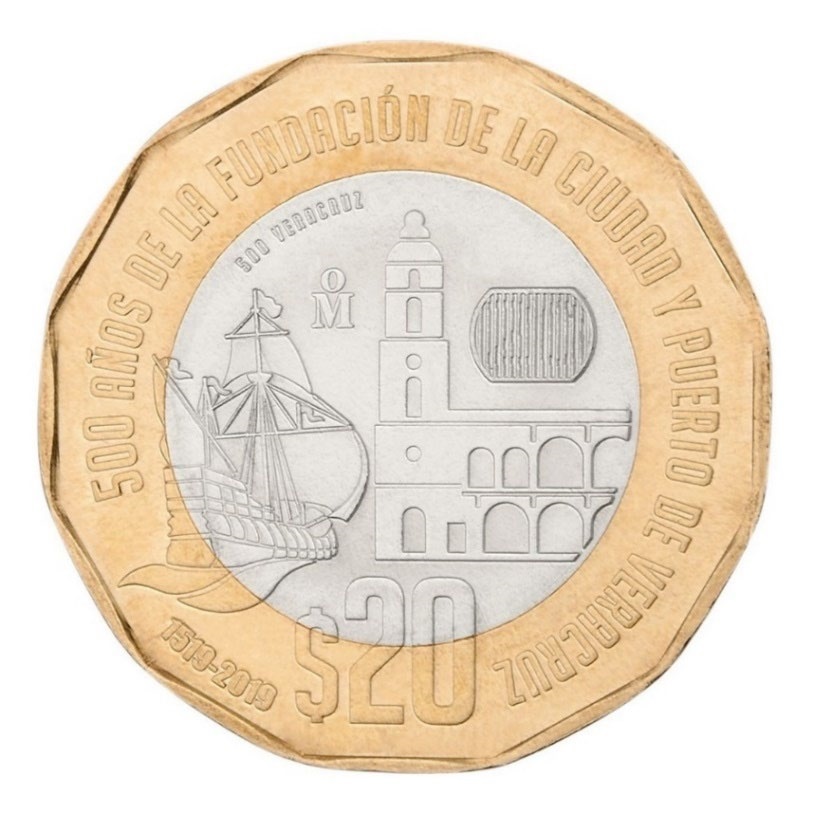
There are currently seven designs in circulation, with the latest design entering circulation in October 2022. The 12-sided bimetallic coin is 6% smaller, 20% lighter and 11% cheaper than its predecessor and features enhanced security in the form of a latent image and microtext. Between 2020 and 2022, 161 million 20 peso coins with the new design were put into circulation, 213% more than the average number between 2014 and 2019.
In 1997, the 10 pesos became a coin. Experience from that time corroborated by international experience is that for each banknote three coins had to be issued. The lifespan of a 20 peso banknote is 4.38 years, the lifespan of a coin 30 years. To meet the demand for 20 pesos with banknotes over 30 years, each banknote would have to be replaced 6.9 times. The cost of a 20 peso banknote is 1.38 pesos, the cost of a coin 4.98 pesos.
Nonetheless, while migrating 20 pesos from banknote to coin could led to many benefits, the public still prefer the banknote, so for the moment BdM plans to continue meeting the demand for 20 pesos with notes.
Summary
This investigation into how to optimise Mexico’s coins has resulted in three major recommendations:
The 50-cents coin loss rate was expected to be reduced by moving to a larger coin, however production costs would significantly increase, thus the best option is to keep the current diameter.
Alternative alloys are being analysed for the production of 1, 2, 5 and 10 peso coins, thereby saving money.
While meeting the demand for 20 pesos with coins instead of banknotes could be more cost-effective, the public still prefers banknotes. BdM therefore plans to go on satisfying the denomination demand with notes.
Subscriber content
Read the full article
Full access to Coin & Mint News articles, newsletters and archives.