Cash Suppliers Join Forces to Examine the Impact of Payments


A group of organisations from both the coin and banknote sectors have joined forces to support a first-of-its-kind in-depth study into the environmental impact of cash versus digital payments.
The initiative was spearheaded by the Mint Directors Working Group (MDWG), which celebrates its 30th anniversary this year and comprises 28 mints and National Central Banks in Europe. It was founded in 1992 to deal with all aspects of the coin industry at the European level, including coin circulation and numismatics, R&D, materials, fabrication and recycling of coins in the Eurosystem, with a focus on best practice, and technical, economic and environmental studies.
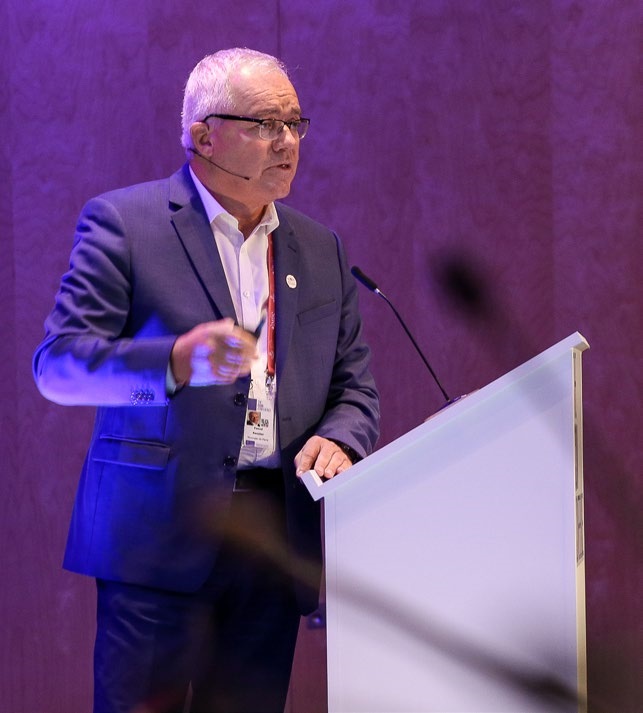
Speaking at the Coin Conference in October, current President of the MDWG since 2016, Pascal Rencker of Monnaie de Paris, presented the background to the study. With cash under pressure, the MDWG wants to ensure there is a level playing field when it comes to sustainability. There have been a number of studies into cash but hardly any into payments. It seeks to redress the balance, he explained.
The study will include an analysis and comparison of the production, life, use and end of life for coins, banknotes, credit cards and smartphones. It will take a year to complete at a cost in the region of €200,000, funded by 16 organisations from the banknote and coin industries, providing a rare and welcome example of collaboration between two of the stakeholders in the cash community.
Responsible partners
The MDWG is leading the project together with the International Currency Association, whose members are largely made up of banknote printers and suppliers. The steering committee includes Monnaie de Paris, FNMT, the Bavarian Mint, Oberthur Fiduciaire, Koenig & Bauer (for the International Currency Association) and Crane Currency.
The project team is made up of the mints of Austria, Hungary, Badem- Wuerttemberg, Greece and the Netherlands, along with SICPA, WMU, Schuler and Spaleck + Wertli.
The research institutes working on the project are CO2 Logic, South Pole Group, A2DM and IFC.
Project plan
The report has been commissioned against a background of ‘cash bashing’ – namely, misleading information about cash being dirty, transmitting disease, costing too much and not being environmentally friendly – coupled with the promotion of digital payments. According to Pascal, there is a lack of recent scientific studies and evidence against these assertions.
Hence the plan to:
Create a joint group to team up for a research study
Mandate a professional and independent institute to conduct the work
Put together a wide panel of cash actors – coins as well as banknote
Use a solid and professional methodology
Address the issue of the environmental impact of cash and give elements of comparison with digital payments
Limit the study to a homogenous system of general data – ie. Europe (EU27 + UK), representing 516 million people
Finance it from volunteering and environmentally responsible cash companies.
And so the study was born.
Progress and output
The pre-framing and the scoping and intermediate reporting work has been completed and the decision has been made to proceed. The project now enters the data collection, data processing and pre- result work, with final results and publication due in October 2023.
The data collection includes:
Capturing the number of transactions in each country
The average amount of the transaction
The distribution of banknotes and coins produced by value
The number of coins, banknotes and credit cards produced per year
The number of coins and banknotes used since creation
The lifespan of coins, banknotes, credit cards and smartphones
Output.
The project is looking at the Product Carbon Footprint (PCF) using the Bilan Carbone® methodology. This methodology is used by the French government agency for environment and energy management. It is independently verified and is compliant with the ISO 14064 standard and the GHG Protocol (Green House Gas). It measures both direct and indirect emissions.
At the end of the project a PCF per payment method will be produced giving a single criteria Life Cycle Assessment of GHG emissions.
Final word
This is an important initiative for the industry worldwide. The work is being carried out to the highest standards and it will deliver clarity on the relative environmental GHG emissions of different payments. All too often cash is measured carefully and in detail while its competitors are not. This redresses the balance.
Whatever the result, it adds urgency and relevance to the work being carried out on cash to minimise the impact that it has.
Subscriber content
Read the full article
Full access to Coin & Mint News articles, newsletters and archives.