Monnaie de Paris: from Ancient to Modern – Building Resilience for the Digital Age

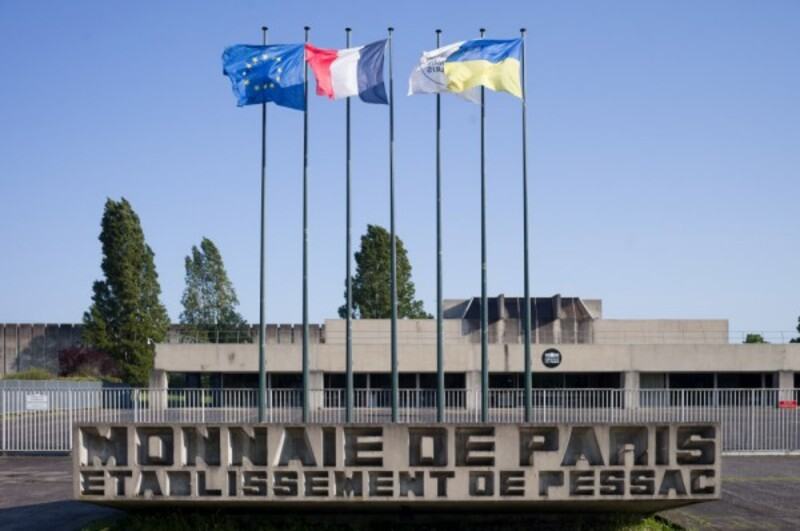
Monnaie de Paris, the French-state owned mint, has been in existence since 864, making it not only the oldest institution in France, but probably in the world too.
But its millennium-plus history has not prevented it from moving into the modern era of minting and adapting to the 21st century challenges of creating objects of trust and beauty in an increasingly digital world. It recently celebrated the 50th anniversary of its production facility in Pessac in France, is creating luxury (and award-winning) items alongside its circulating coins, and is positioning itself as a leader in advocating for both sustainability and the future of cash.
Coin & Mint News™ spoke to its CEO, Marc Schwartz, about the company, his views of the industry as a relative newcomer, and how it is meeting the challenges of today for coins.
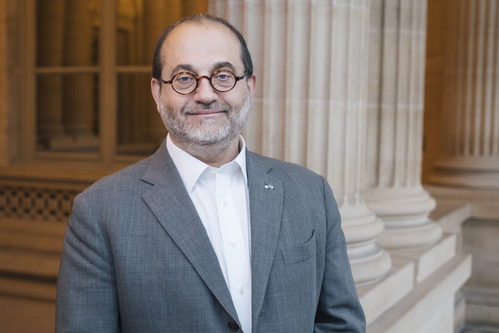 Marc Schwartz.
Q: Firstly, could you tell us a little about your background.
A: It’s a mix of public sector and corporate world. I studied economics and finance (many years ago!) and started my professional life as an auditor with the French Court of Audit. I then joined the Treasury Department, and moved on to responsibilities among the business world, as CFO of a media company and consulting activities.
After 10 years in the private sector, I decided to return to the public administration and was Chief of Staff of the Minister for Culture. President Macron appointed me as Chairman & CEO of Monnaie de Paris five years ago.
Q: Congratulations on the 50th anniversary milestone for your Pessac factory. Do you have any plans for the future of the facility, and for circulating coin production in general?
A: We were very proud indeed to celebrate the 50th anniversary of our Pessac facility, which will continue to produce euro and foreign currencies for the whole world. To prepare our next 50 years, we will invest more than €10 million to ensure the long- term viability of the facility.
We also intend to enhance the value of our Pessac site through a large-scale real estate project. The first phase, to be completed by 2027, will accommodate industrial companies, start-ups, research laboratories and offices.
Q: Monnaie de Paris released a mini medal to mark the anniversary. What prompted the special engraving on the reverse?
A: The reverse of this medal is the classical reverse Monnaie de Paris uses on its souvenir medals. To celebrate the 50th anniversary of our Pessac factory, we integrated in this medal an innovation called ‘U BLEAM’. Scanning the reverse of the medal with the U BLEAM application gives you access to exclusive online content with image footage, interviews and videos about our history.
By doing this, we aim to establish a link between the physical world of coins and medals and the digital world.
Q: Speaking of exclusive objects, congratulations also on winning the Best Packaging award at the recent MDC Awards. Could you tell us a little about the project?
A: We were extremely happy to win this award, which highlights the talent of the men and women of Monnaie de Paris.
This exceptional 2-kilo gold coin (with a unique mintage) is a tribute to Christian Dior’s fragrance ‘Miss Dior’. It is presented in a lovely trunk-shaped case, inspired by the trunks used to store and protect the designer’s dresses. This case was entirely made by hand with premium leathers to highlight the coin. Mirrors were positioned behind the perfume-shaped coin, allowing a complete overview. The box comes with a pair of gloves, a brochure, a certificate of authenticity and an original illustration, designed and signed by French artist Xavier Casalta.
Q: Production of the medals for the recent Rugby World Cup utilised metals from an innovative source, recycled mobile phone components. How did this partnership with Orange come about, and were there any challenges in design or production using these materials?
A: The Rugby World Cup Medals were a great challenge and a perfect expression of teamwork between institutions. The idea of recycled metal came when the World Cup Organisation Committee contacted us to discuss the official medals for the athletes. Our shared values led to a full CSR project. As a longtime partner of rugby and a company sharing these environmental values, Orange Group was the ideal third party.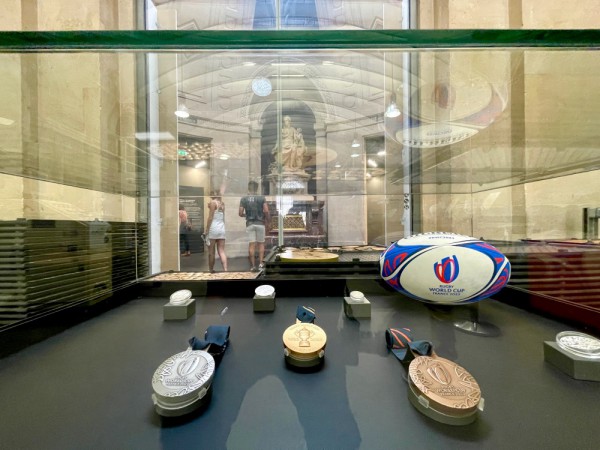
It was a challenging project on the industrial side. The first issue was to maintain a stable alloy using recycled metal (mainly from mobile phones) to make the bronze plaques. Thanks to our foundry, this challenge was completed!
The second challenge was a mix of design and technique: we wanted to have a special design for the suspension ring using the shape of Arc de Triomphe, which is not easy to combine with a round medal.
Finally, a mechanical technique enabled us to bond the ring with the medal, making a solid medal to be worn by the best rugby players on Earth.
Q: Your team presented on coin materials and plastic reduction at the MDC. How is the Mint considering sustainability, both in terms of production and more generally?
A: Sustainability is at the very heart of our strategic plan, ‘Ambition 2027’: one of its pillars is dedicated to ‘accelerating our ecological transition.’ We have four main targets: to reduce by 50% our carbon footprint by 2030; to reduce by 80% our non-recycled waste; to implement a zero-plastic policy; and to reduce by 30% our external dependency in energy.
It will be difficult to reach some of these objectives, particularly the ones relating to carbon footprint and plastic use, but we also know that every company must do its best to reduce its environmental impact. Our children keep telling us that we have ‘no Planet B’. And they are right.
Q: Going back to recent partnerships, Monnaie de Paris has also collaborated with Lacoste to produce the ‘French Excellence’ range. How important are these partnerships to the Mint?
A: For several years now, the series French Excellence has combined the incredible savoir-faire of the main French luxury houses and cultural institutions with Monnaie de Paris’ own savoir-faire. Among the great houses we worked with are Cartier, Baccarat, Van Cleef & Arpels, Boucheron and Dior.
This collection is an opportunity to challenge ourselves and offer more innovative and powerful series. We made a crocodile-shaped coin with Lacoste and a coin with a ‘grand feu’ enamel with The Louvre!
Q: Furthermore, how important is it to focus on the numismatics side of the industry, and bullion, in addition to circulating coins?
A: Circulating coins are still an important part of our activities (45% of our turnover), but the collector coins business is growing faster. And we believe that they can help to modernize the image of coins through different collections made in partnerships, and to enlarge our customer base.
Q: Your recent surveys on attitudes to cash report that French attachment to cash remains very strong. What are the other main findings of the survey?
A: French attachment to cash is strengthening even though its transactional use (as a means of payment) is decreasing. This is what I call ‘the second paradox of cash’. And this true for all generations: 83% of French people declare themselves attached to cash but this level rises to 86% among people aged 18 to 24. There is a clear rejection of a cashless world, as cash proves to be a reassuring means of payment, particularly in view of the current inflation.
Our annual survey underlines the increasing popularity of digital means of payment, but this is not at the expense of cash. French people want to have the choice between digital and physical means of payment. Cash remains the most trusted means of payment, with 96% of French people finding it trustworthy.
Q: Monnaie de Paris is playing an increasingly prominent role in researching debating and promoting the role of cash more – unusually so for a mint. What are your motivations for these efforts?
A: Rumours about the death of cash have been greatly exaggerated! And if cash is less used for transactions, the demand for store-of-value motives has been on the rise.
Hence, cash in circulation is still increasing in France.
Our survey shows that French people are increasingly concerned about a potential disappearance of cash. This can be seen in many countries, even those where cash usage has become very low. As a significant part of the population still relies on cash, it is important to guarantee access to it and acceptance of it.
Our efforts aim at underlining the unique characteristics of cash and its prominent stabilising role for a well- functioning economy.
Q: Your background is not from the mint industry specifically. What have been your observations about the industry, what do you think it should be doing going forward, and do you think it’s an industry that has future?
A: This industry is fascinating because it is a unique mix of artistic creation, manufacturing, and cultural activities. It has a lot to do with our common history: never forget that Monnaie de Paris is the oldest living institution in France and maybe in the world!
But like the media and cultural industries, which I come from, it’s shaken by the digital transition. I strongly believe it has a future, but it needs to transform itself to meet the challenges that lie ahead.
Q: Finally, looking into the future, where do you hope to be in ten years’ time?
A: Personally? In my country house in Normandy!
If your question relates to Monnaie de Paris, I would say: a well-balanced company that has found a stage where its different business lines made us resilient enough to go through tougher times.
Subscriber content
Read the full article
Full access to Coin & Mint News articles, newsletters and archives.