The Meaning of Coin for South African Mint’s Honey Mamabolo

When Honey Mamabolo joined the South African Mint as its Managing Director (MD) in February 2020, she was facing not only adjusting to a new role in a new company but also, within a matter of weeks, the huge challenge of COVID-19 and the subsequent lockdowns.
Three years to the day after first joining the Mint, Honey sat down with Coin & Mint News™ at the World Money Fair in Berlin – the first expo since 2020, held from 3–5 February 2023 – to discuss the last few years as a leader and overcoming the challenges caused by the pandemic, the upcoming refreshed coin series, and the importance of coin in South Africa.
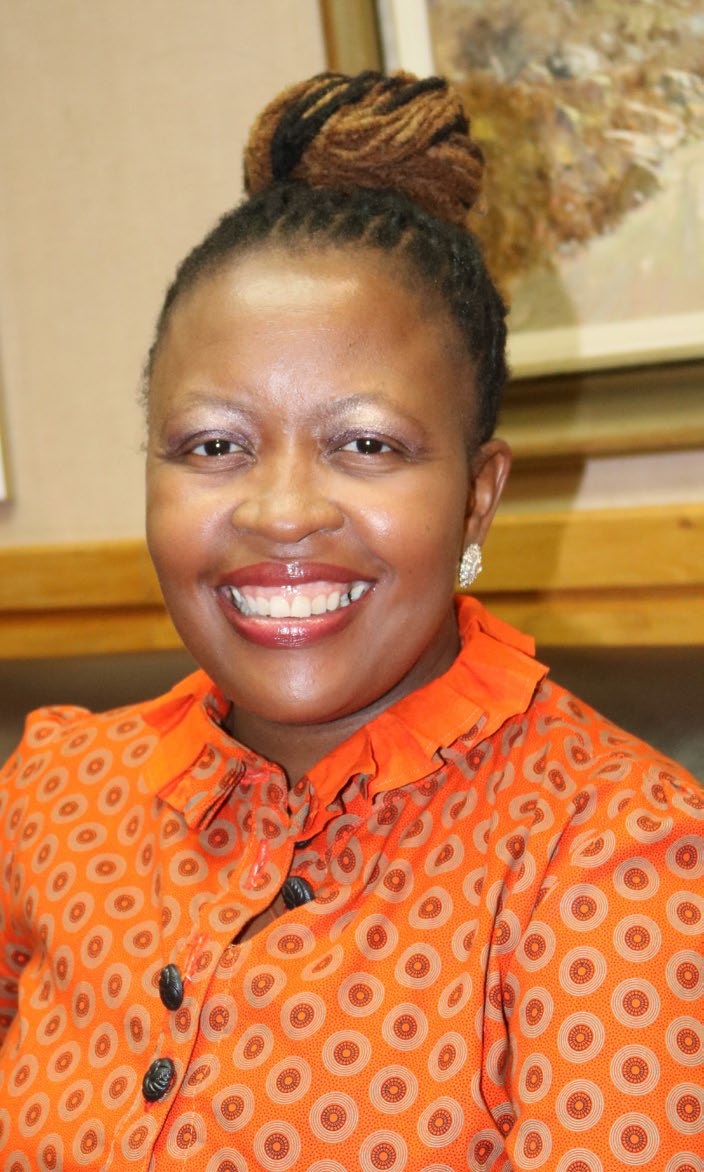 Honey Mamabolo
Q: Can you tell us a little about yourself?
A: I see myself as a natural change agent. It’s what drives me, and everything I have done throughout my career has been about transformation. I would describe myself currently as a transformational leader. But I am also a mom of two young adults, aged 19 and 22, and while I have showed up as a career woman, at the heart of hearts I am a family woman.
I am a qualified chemical engineer and after a short stint in mining, I worked in the banking sector for many years. I then moved into energy consulting, mainly implementation of energy policy, thereafter energy finance and private equity and later automotive chemicals. And now I am at the Mint.
Q: So very varied. How did you end up at the Mint, and what attracted you to it?
A: I have a very interesting story about the Mint. Many years ago, when my family first moved into the area where the Mint is, it was an industrial area that was developing into a residential area. At that time there were only two buildings, the Development Bank of Southern Africa and the South African Mint, which moved there in 1989.
As a teenager back then, after church we used to go for coffee at the restaurant at the Mint. Never in a million years would I have imagined that one day I would work at the Mint, not to mention lead the organisation.
The South African Reserve Bank (SARB) was scouting for an MD for the Mint and I guess, and am grateful, that they came across my humble CV. Following a series of interviews and evaluations, I was appointed in the role. I have always said that I’d like to serve my country and I saw this opportunity as one of service to South Africa.
And here we are, three years later.
Q: You joined just before the onset of the global pandemic. What was that like for the Mint and how did you deal with COVID?
A: Personally, I did not find the impact of COVID on my work as a shock as I had worked as an international consultant before. I was used to working with people without ever physically meeting them, telecommuting and delivering work.
However, for most of my colleagues at the Mint it was a shock because they were used to working in offices, and a lot of colleagues initially struggled with the loss of connecting with each other.
We dealt with the pandemic very well. We’ve been very stable and steady in a very difficult time, and one of the things that I’ve learned is that the Minters – as we affectionately refer to ourselves – are resilient. This trying period has shown just how resilient we are, and I believe if we could ride this wave, we would be able to ride any other wave.
I see myself as a leader for times like these – crisis times, also known as VUCA times which are characterised by high ‘volatility, uncertainty, complexity and ambiguity’. Many leaders navigating COVID struggled. I would like to believe that I was made for VUCA.
Since I was joining a new company and new industry, my priority was to connect with and getting to know the people. However, the pandemic did mean that this took longer, as connecting and meeting everyone in person was not possible.
To overcome this, one of the early measures I introduced was my monthly message/newsletter to the staff. I sent my first message on 20 March 2020, and I’ve since been writing it every month, on the same day. I feel it is a good way to connect. Everyone gets to know the business agenda, key focus areas and milestones.
The topics vary from anything around the history of money and the Mint itself, to what is happening in the country and the world in relation to minting, currencies and central banking at large. The focus has now shifted because South Africa will be issuing a refreshed coin series this year. The last time that happened was 34 years ago.
So, the theme now is more about the upcoming coin series, the significance of it and the role of the Mint, its employees and our supply chain partners in delivering this mammoth task.
Q: On the topic of the refreshed coin series, what was the rationale behind a redesign and why now?
A: Advancements in technology brought about an increase in the sophistication of counterfeiters. So, we have to be a step ahead by enhancing the security features and design of our coin, while aligning with international best practice.
In addition to improved security features and the use of new technologies, it is about better cost efficiencies (eg. we have changed some of the coin sizes) and maintaining public trust in our currency.
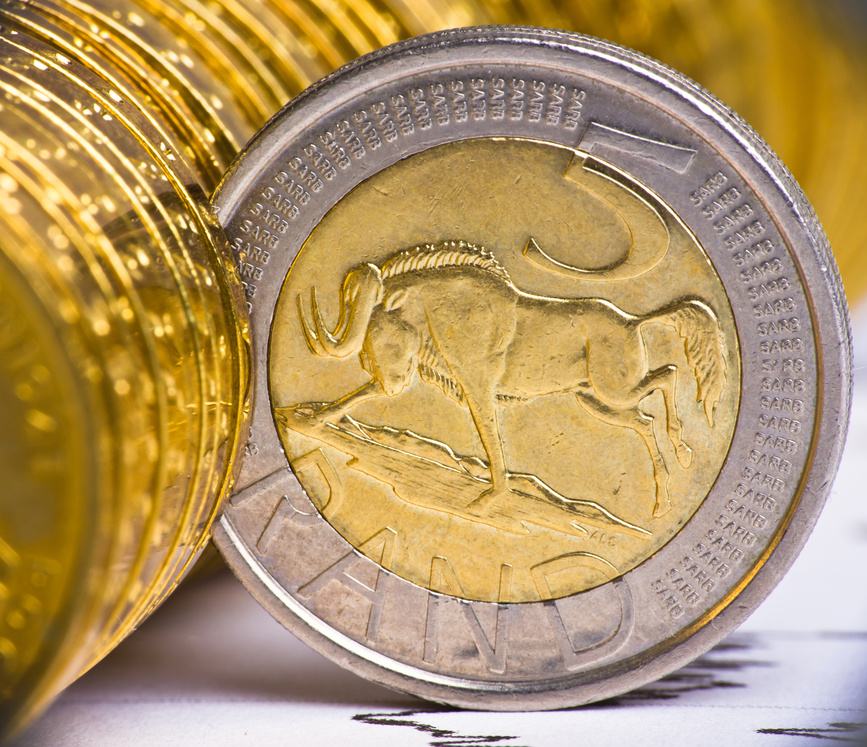
The theme of the fourth decimal coin series is ‘deep ecology’, a philosophy that emphasises the value of all life forms, including the significance of the ecosystem, natural processes and the interdependence between humans and the natural environment. Where in the previous series we showcased animals and some plant themes, for the first time our coin series will have aquatic animals and insects as part of the deep ecology theme. Our revised R5 features a whale, and the lowest denomination, the 10 cent, showcases the honeybee.
The SARB is also launching upgraded banknotes which, instead of individual animals will now display a family of the Big 5 animals.
We are not introducing new denominations, and South Africa does not demonetise, so for one of our largest coins, the R5, we will have three versions circulating.
Q: Who designed the coins, and when did the process begin?
A: It took four years of collaboration, consultation, creative thinking and teamwork between the teams at the SARB’s Currency Management Department and the Mint to bring into fruition the country’s fourth decimal coin series.
The designs were commissioned from a diverse skillset of South African designers whom we felt could best do justice to the deep ecology theme.
It is also the first complete circulating coin redesign in three decades, so a great deal of work has gone into ensuring that this is a modern, secure coin that also showcases the best of South African artistic talent in its design.
We are currently in the middle of production but we finished the design and development around the middle of last year. The refreshed coin series will be issued in May this year.
Q: Are you working with the vending machine operators, among other stakeholders, for adaptation?
A: The SARB has indeed consulted vending machine operators. The SARB is responsible for coin circulation and managing all stakeholders in the value chain, such as retail banks and vending machine operators.
As a subsidiary of the SARB, we are essentially the contracted manufacturer – the SARB owns the coin, determines the issuance and controls the supply chain. It is the SARB’s sole mandate to produce, issue and destroy banknotes and coin. We are only responsible for minting the coin.
However, numismatics are products of the Mint, for which we manage the entire value chain – from production to sale.
Q: In addition to domestic circulating coin, do you also mint coins for other countries?
A: We do produce circulating coins for other countries and have in the past also produced commemorative circulation coins for these export customers.
Q: How large is the South African Mint currently?
A: We employ around 460 people, and we are the largest and only export Mint in Africa.
Q: Can you tell us a little about the numismatics side of the Mint?
A: That’s very exciting. What is interesting is that the domestic market used to be very strong for numismatics but over time we’ve seen growth in the export market. In the last three years we’ve rationalised our product line and now we only have two flagship numismatic products – the Krugerrand proof and Big 5 series.
The Big 5 has done well, extremely well. We launched the second animal in the first series in 2020, just before I joined the Mint, and now we are in the second series. There is high demand, and in my view, it is a really special product as it showcases Southern Africa’s pride on a coin. A lot of local collectors love this but, as I said, the growth is mainly in the export market for these products.
We sell our numismatic products mainly through the dealer networks, but we do have a shop onsite at the Mint called Coin World.
Last year, we produced a very special centenary commemorative circulation coin in collaboration with the SARB and it was a finalist at the Excellence in Coin Awards at the Coin Conference in Amsterdam. The R5 coin, documenting the history of our currency, commemorated 100 years of the SARB. The six coins depicted on the commemorative R5 coin represent the various editions of the South African currency since the unification of South Africa to the present.
The Mandela R5 we minted represents both standard and commemorative currency.
Most people do not know this, but in that coin we also feature the future 10-cent coin, which is part of the refreshed coin series.
Q: Do you always use the R5 for the commemorative coins?
A: In the past, various coins – from the 50 cent to the R5 coin – have been issued as commemorative coins; however, the R5 is the most often used.
Before my time, in 2019, the Mint commemorated 25 years of South Africa’s constitutional democracy with a series called SA25 – which comprised five R2 coins and one R5 coin. The Mint engaged the public for the designs, and so, artists from all walks of life came forward with designs for the six coins. In our constitution we have the Bill of Rights. Through the R2 coins the Mint commemorated five rights in the Bill, namely the right to freedom of movement and residence; the right to education; children’s rights; environmental rights; and the right to freedom of religion, belief and opinion. All these coins are in circulation. The Mint produced both numismatic and circulation sets.
The SA25 R5 coin designed by youth artist Lady Skollie has a special place in my heart. The design shows a snake-like queue of people waiting to vote for the first time. I get goosebumps just thinking of the time. On 27 April 1994, I was 18 years old and eligible to vote for the first time not just by age, but by race. I remember I was working as a voting officer in my township, and I stood in the queue at the station where I was working. There were so many of us standing there. And now I get to lead the company that captured that event on a coin.
I am a product of that transformation in the country. From those queues, who would have thought that a young woman of African descent would one day lead the Mint. As MD of the Mint today, that R5 holds so much significance to me.
Q: You obviously have a love of the product, but how important do you think coins are in society more generally?
A: In our economy, which is regarded as still developing or an emerging market economy, there is the secondary economy (informal trade) where people transact with cash and coin. While digital payments have certainly come through, cash remains very important in our society.
Q: Are coins also very important in South Africa for national pride and creating events among other things?
A: Certainly. We use our numismatic coins to do that, and the task to educate the public on the difference between circulation and numismatic coins is critical.
When I am approached by the media for interviews, I often realise that there is a gap where we haven’t educated the public in terms of the different products, their function and how the public can consume them. For example, people collect certain circulation coins – particularly commemorative ones – because they think that the value is/would be higher than their face value.
As part of the launch of the refreshed coin series, the SARB is embarking on a communication and awareness campaign to ensure that the public appreciate the role of circulation coins and do not hoard them.
Subscriber content
Read the full article
Full access to Coin & Mint News articles, newsletters and archives.