The Debate on Coin Rounding

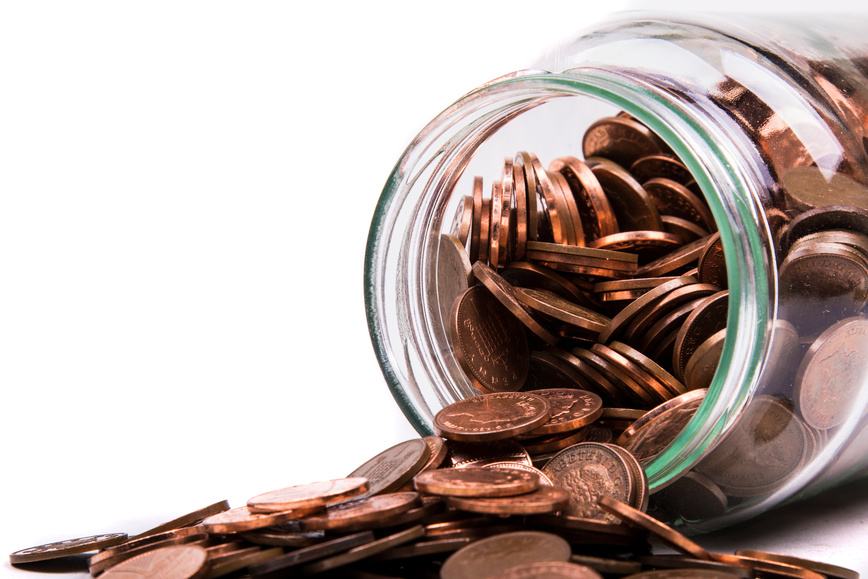
As those involved in the industry continuously review the cost of coins, not just production but also distribution and circulation costs, so do government bodies to ensure that the currency systems in place are best suited to the areas in which they operate.
Minting costs, especially those higher than coin face values, are inevitably absorbed by whichever treasury or central bank purchases the coins. Cost efficiency is, unsurprisingly, particularly important in the case of public money. In addition, the purchasing power of many lower denomination coins has diminished over time, leading to a fall in their use and less of these coins continuously circulating.
These factors all considered, it is somewhat unsurprising that several governments have issued, or are in the process of conducting, consultations around the matter. Between 2016 and 2022, 19 countries discontinued issuing one or more of their lowest denomination coins, often following consultation. They include the Bahamas, Barbados, Jamaica, Mexico, Namibia and Ukraine, along with several eurozone countries (Belgium, Ireland, Italy, and Slovakia).
Latvia could be next. The latest Payment Radar published by Latvijas Banka notes that the share of the public supporting the discontinuation of the 1 and 2 cent coins exceeds the share of the public supporting their continued circulation. The central bank has since developed a draft law on cash rounding and has said it is in discussions with the Latvian Ministry of Finance and the State Revenue Service as to how this may be implemented in practice.
As is Lithuania. The Lithuanian parliament, Seimas, is to consider a bill on rounding cash payments, a step towards phasing out 1 and 2 cent coins. The plan is to start rounding off cash payments from May 2024, giving enough time for retailers to upgrade cash registers.
The Bank of Estonia (Eesti Pank) is also planning to cease the issue of its 1 and 2 cent coins, citing environmental benefits and minimal impact on inflation, and is preparing new rounding rules that will facilitate their removal from circulation.
No change to IoM small change
Earlier this year, the Isle of Man (IoM) Treasury carried out a consultation around usage of the island’s lowest denomination coins, asking respondents to consider proposals to withdraw them from circulation (see CMN July, September 2023). This included the 1p, 2p, and 5p coins, where a proposed replacement would see the introduction of an island-wide rounding system whereby cash transactions would be rounded up or down to the nearest 10p.
The Treasury has since confirmed that it will not remove the low denomination coins from circulation, publishing a six-page Response Document detailing the outcome of the seven-week consultation.
A total of 1,050 responses were submitted to the consultation, with nearly half (48%) of respondents disagreeing with the removal of any small coins. A greater percentage
of organisations (54%) disagreed with the potential withdrawal, in comparison to individual respondents (48%).
When asked whether they agreed that 1p, 2p and 5p coins no longer have any real purchasing power, 55% of respondents disagreed.
The perceived inflationary effect of withdrawing these coins and rounding to the nearest 10p was ranked as the key concern, with the perceived effect on donations to charity the next most important concern. As noted in the Response Document, ‘cash is still an important, and reliable, means of receiving donations’, with many charities relying on donations of loose change.
Treasury Minister, Dr Alex Allinson, appealed to people ‘to dig out any jars of small change’ and give them to a good cause, whilst encouraging charities to consider ‘modernis[ing] their collection strategy’ through investment in mobile card readers.
Other concerns included the withdrawal acting as an ‘unwanted nudge’ in the direction of a cashless society, including privacy infringements, and discrimination against the poor, the vulnerable, and those who prefer to use cash.
Respondents also noted that whilst banks and card companies off the island may benefit, it would impact those least able to afford changes of this nature on the island, and that card machines and their internet connection is not always reliable as a method of payment or giving donations.
Support for the removal of solely the 1p or 2p coins was minimal, at less than 2% and 1%, respectively. This increased to 18% overall when asked about the removal of the 1p and 2p only, and again to 30% when asked about the removal of the 1p, 2p, and 5p together.
A Local Authority noted that digital payments far exceed those made using cash, in terms of its income, whilst other respondents noted that they felt that change was ‘inevitable’ and that the coins ‘have no value’.
One respondent noted that any withdrawal should be accompanied by retailer education on rounding, which aligns with the viewpoint of several organisations that any introduction of cash rounding needed to be clearly explained. A respondent noting that the introduction of rounding should only be introduced in concert with the UK does align with the Treasury’s concluding statement, that in the event of the UK withdrawing low value coins from legal tender, the Isle of Man Government would follow suit.
The Treasury also closed the Response Document by writing that it ‘maintains its concern at the continuing cost of retaining low value coins’. It will continue its policy of not minting new Manx 1p and 2p coins, and in the event of coin stocks running low, the Treasury will encourage businesses and customers to round transactions ‘on a voluntary basis’.
Falkland Islands launches public consultations
The Falkland Islands Treasury Department has launched two consultations concerning changes to the archipelago’s currency, asking the public to provide its feedback on the proposals.
The first involves the redesign of the Falkland Islands banknotes, with respondents asked to suggest themes for an updated banknote series. The second, and most relevant for Coin & Mint News readers, features a proposal to withdraw low value coins from circulation, the 1p and 2p.
The Treasury held a public meeting in the capital, Stanley, regarding the process for the coin withdrawal consultation. It noted that the findings of the consultation, which closed 17 December, will help inform its decision on whether to remove the lowest denomination coins from circulation.
Subscriber content
Read the full article
Full access to Coin & Mint News articles, newsletters and archives.